
Baton Rouge, Louisiana
Pipe Details
- 2-inch (50.8-mm) carbon steel pipe, transporting butene and hexene, experienced corrosion under insulation
- 2 locations at a double elbow required repair
- Design Pressure: 285 psi (2 MPa)
- Operating Pressure: 100 psi (0.7 MPa)
- Design Temperature: 100˚F (38˚C)
Summary
- 2-inch (50.8-mm) carbon steel pipe, transporting butene and hexene, experienced CUI
- After 5 years of service, the repair was as good as new
- The owner was confident to continue operations with the composite repair for 2 more years
- ThermoWrap was applied to the original CUI damage to repair 2 locations at a double elbow
- 2 trained technicians repaired the damage in a matter of hours
Benefits
CSNRI delivered a fast, reliable and extremely cost-effective solution to a potentially costly and unsafe issue for the chemical plant. The ThermoWrap composite system enabled safe, uninterrupted service for 5 years and was deemed serviceable by the plant owner for another 2 years. If the next turnaround has not been scheduled at that time, the integrity of the repair will be reassessed to determine if it is suitable for continued safe service.
Most composite repairs resolve integrity issues and then simply become another part of the safely functioning piping system. Once repairs are made in plants and refineries, owners normally make plans to replace the damaged sections during a scheduled turnaround, so the technicians who carried out the repair may never see how the repair has performed in service when it reaches end of life. Occasionally, however, there is an opportunity to examine a repair that has been in service. On these rare occasions, it provides a great opportunity to assess just how well the composite has performed over time. Five years after applying the ThermoWrap composite system to repair corrosion under insulation (CUI) on two elbows on a 2-inch (50.8-mm) carbon steel line transporting butene and hexene at a chemical plant in Baton Rouge, Louisiana, plant engineers found themselves with the need to review the possibilities to keep the repairs operating. Although plans had been made to replace the repaired piping during a turnaround, because the date for the turnaround was repeatedly postponed, the section of repaired pipe was still in service. To make sure there were no safety issues, an inspection team at the plant was examining the repair to evaluate the line. A visual examination showed that over the span of 5 years of demanding service, the system had undergone no degradation. The repair was pristine, and the integrity of the asset was unaffected.
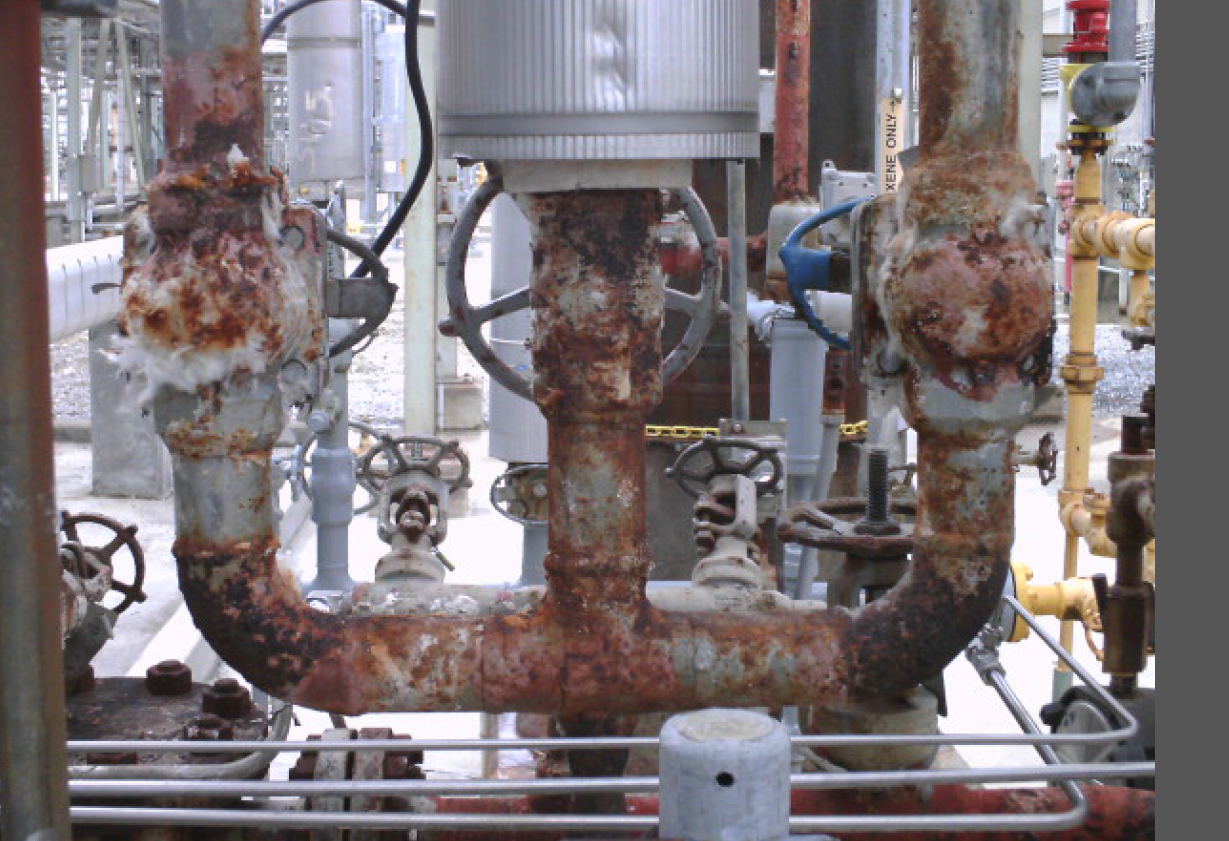
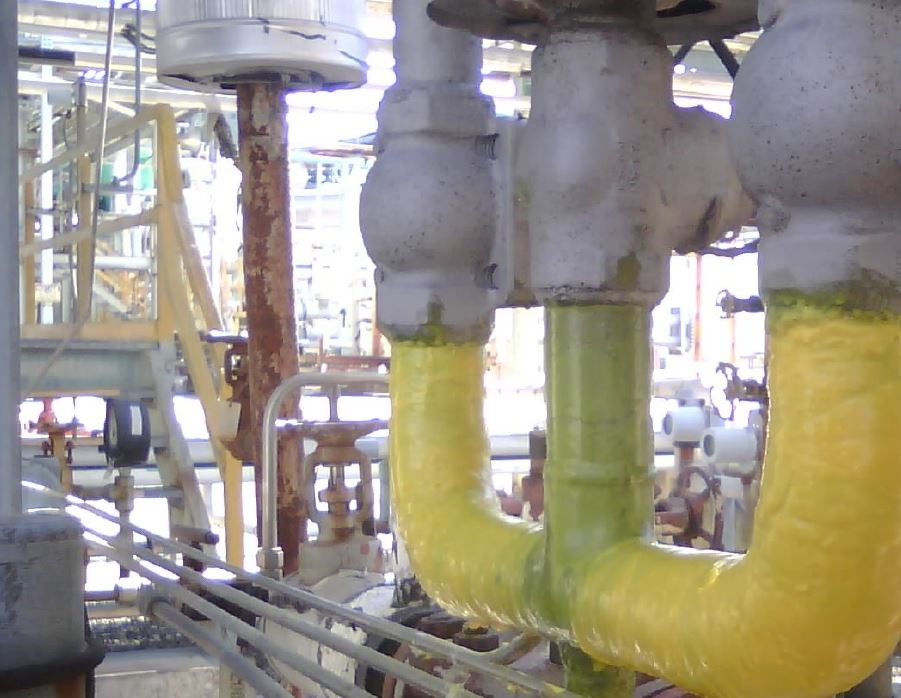
Original Repair
Five years earlier, the plant owner had contracted CSNRI to address the initial CUI damage because of the company’s success in addressing other asset integrity issues on the site. The owner had confidence in CSNRI’s reputation and believed the company’s approach to installing composite solutions complemented the objectives and values at the plant.
The damage consisted of CUI on a 2-inch (50.8-mm) carbon steel line at a double elbow with a tee in the center. Because of the odd geometry – with elbows on both sides of a tee joint – and the proximity of the carbon steel line to other pipes and equipment, there was relatively limited access to damaged areas. A successful composite repair would not only have to be installed in tight conditions, it would also have to meet a design temperature of 100˚F (38˚C) and a design pressure of 285 psi (2 MPa) while operating at 100 psi (0.7 MPa).
Based on engineering and qualification testing, CSNRI determined that the Thermo-Wrap system was the most appropriate solution. ThermoWrap is a factory-saturated, custom engineered composite repair system compatible with temperatures up to 330°F (165°C).
CSNRI trained and qualified installers from a local contractor began preparing the pipe surface for the composite system installation. Unfortunately, during the preparation process, a through wall hole was accidentally opened. Modifications needed to be made to the repair design so the final repair would be able to address a through wall defect. The design for the ThermoWrap system used for the repair was amended to withstand a through wall defect, and repair work proceeded, with the line shut down for safety.
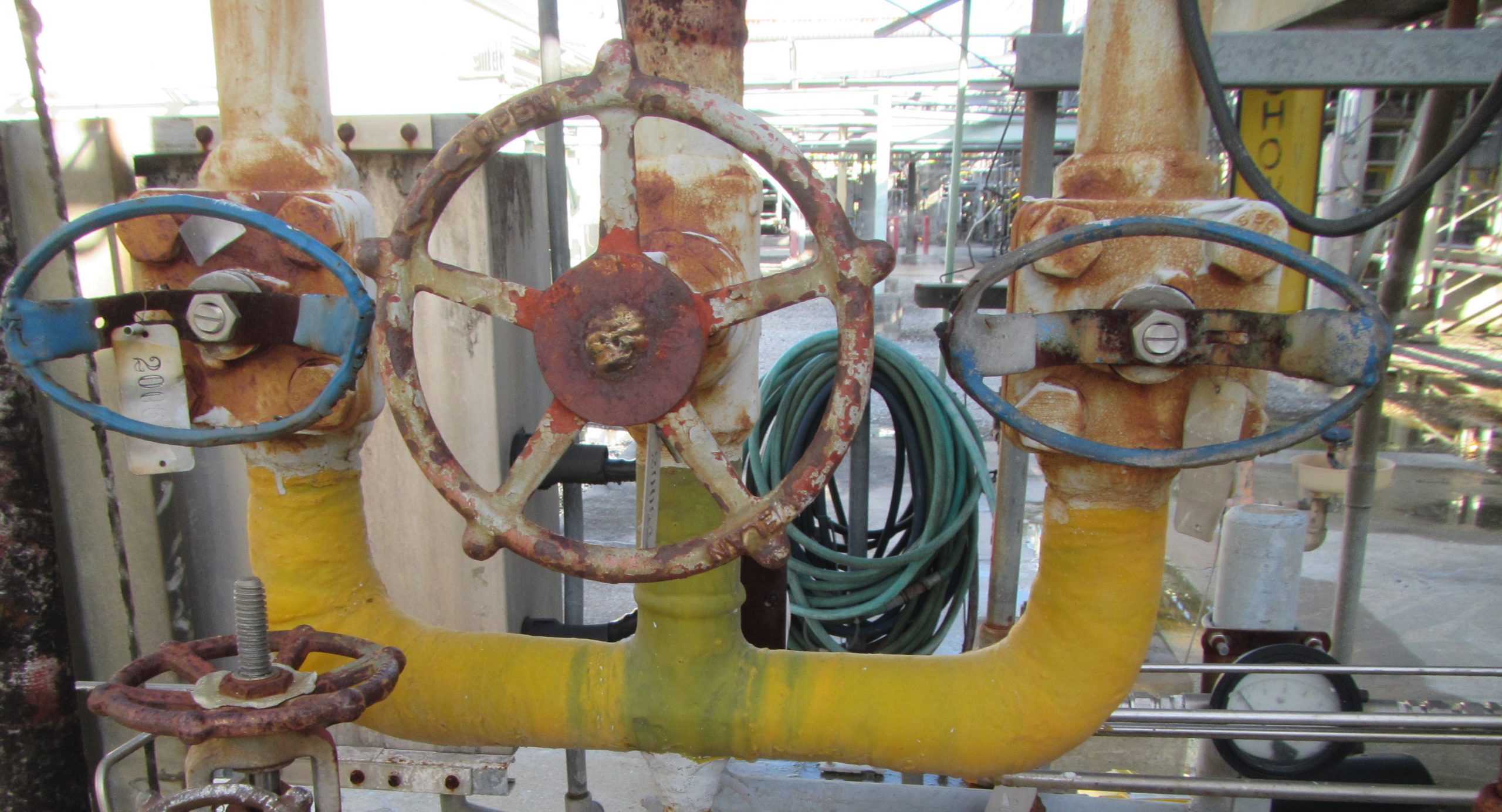
Two technicians applied ThermoWrap to the full length of both elbow joints, completing the repair in a matter of hours with no special equipment or hot work required.
Having the CSNRI composite repair perform so successfully allowed the plant to continue safe and effective operations without worrying about the status of the line. Based on the exceptional performance of the ThermoWrap repair, the plant owner could safely plan to leave the repaired piping in service at least another 2 years, when the next scheduled turnaround would be scheduled.